Week 9: 27 March - 29 March 2007
SIGN UP NOW for the WORKSHOP ON FRIDAY MARCH 30th.
SPECIAL OPPORTUNITY FOR TRAINING WITH EQUIPMENT CONTROL SOFTWARE: (and free software)
Instrumentation Discussion: Tools for measuring hurricanes.
Radiosondes and RaWINDsondes. Site 1. Site 2. An older site. How radiosonde data is interpreted.
Cloud Physics Instrumentation .
Be prepared to work with your group in planning, measurements, and data analysis.
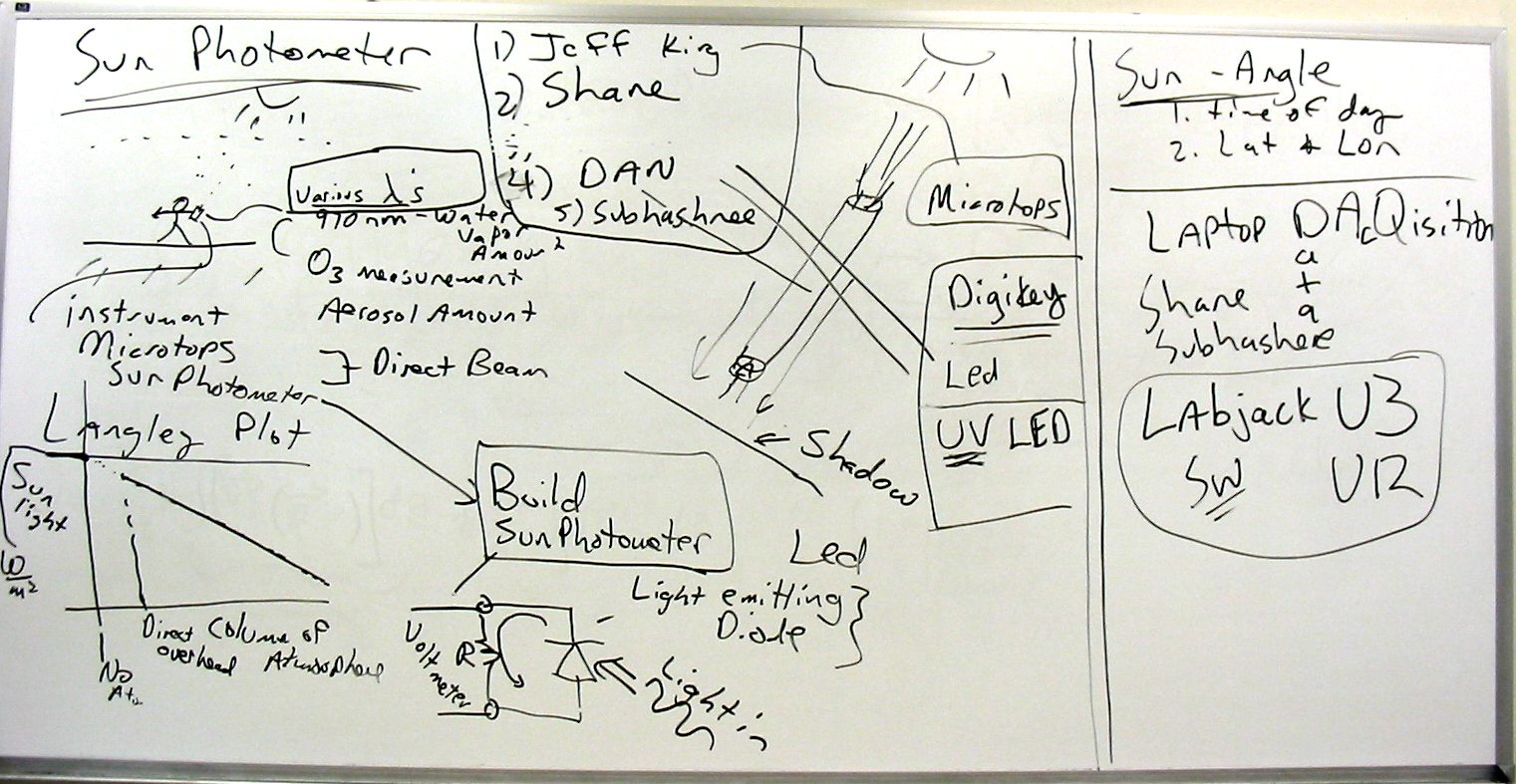
Sun Photometer. (Site).
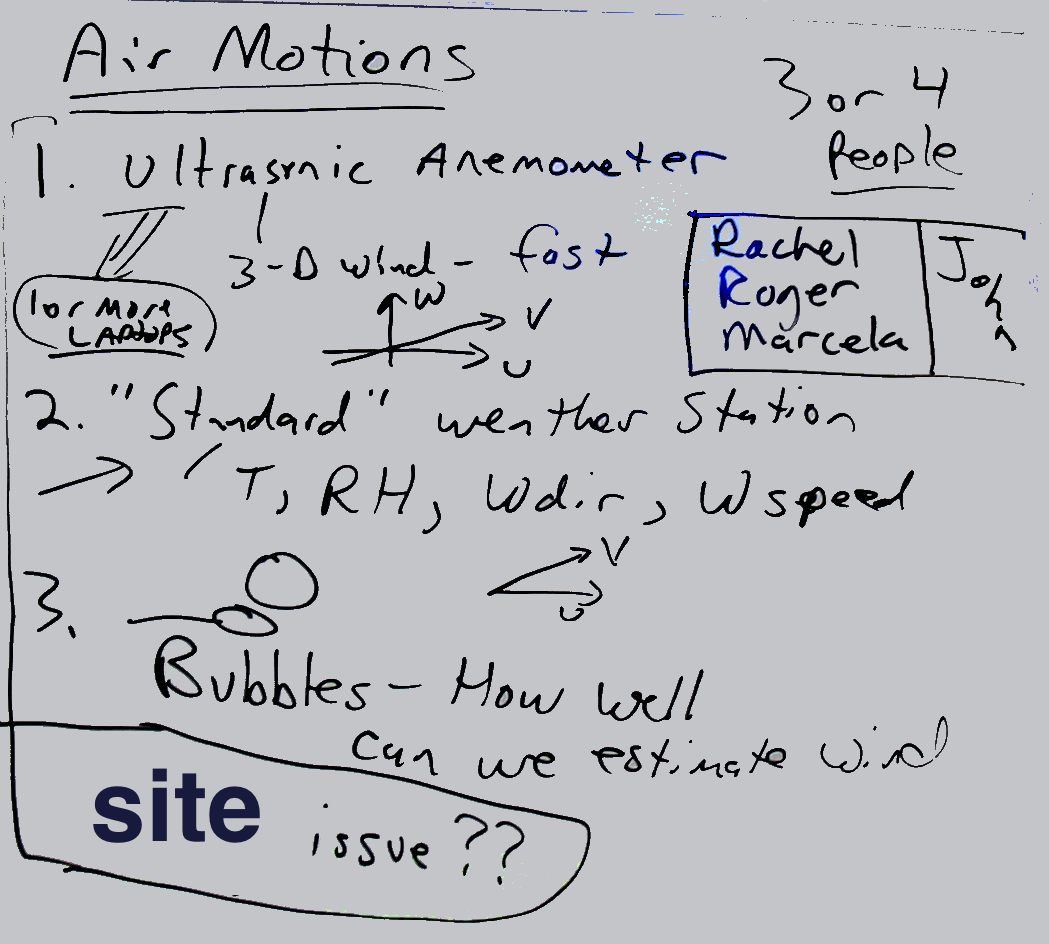
Air Motions. (Presentation. Urban Canyon Paper. Ultrasonic wind transducer manual).
Air Pollution. (Summary of our first campaign).
Week 8: 12 March - 14 March 2007
SIGN UP NOW for the WORKSHOP ON FRIDAY MARCH 30th.
SPECIAL OPPORTUNITY FOR TRAINING WITH EQUIPMENT CONTROL SOFTWARE: (and free software)
Air motions presentation in prelude to measurements.
Measurements in class. Ultrasonic Wind Transducer Manual.
Smart instrumented balloons to follow air masses and make measurements along the way.
We will visit the National Weather Service (NWS) in Reno Tuesday of this week, to better understand the training and skills in use by our local weather service office. Try to be a bit early to class so that we can drive on time to the office.
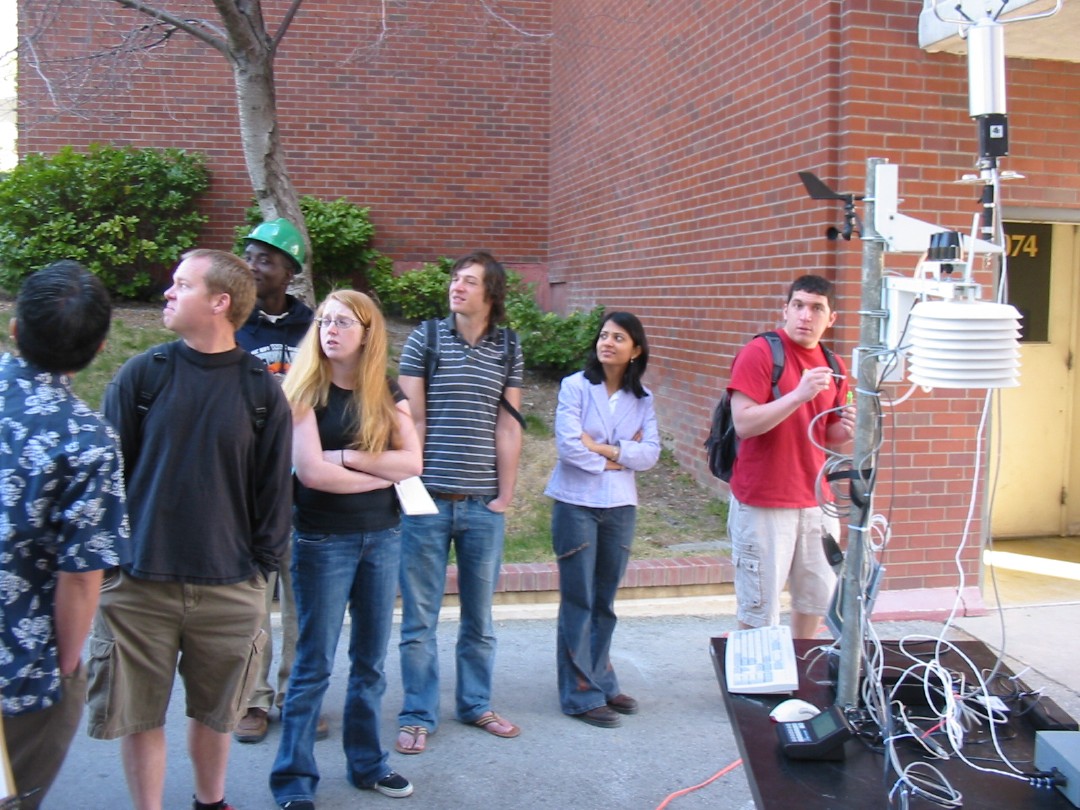
On Thursday we will work with the air motions apparatus as an introduction to the 3rd major project. Be prepared with sunscreen, a hat, and sunglasses, as we most likely will do some measurements outside.
Week 7: 6 March - 8 March 2007
This week we will have a visit from Barbara Zielinska of the Desert Research Institute.
Barbara's presentation on Environmental Organic Chemistry was superb, 6 Mar 07.
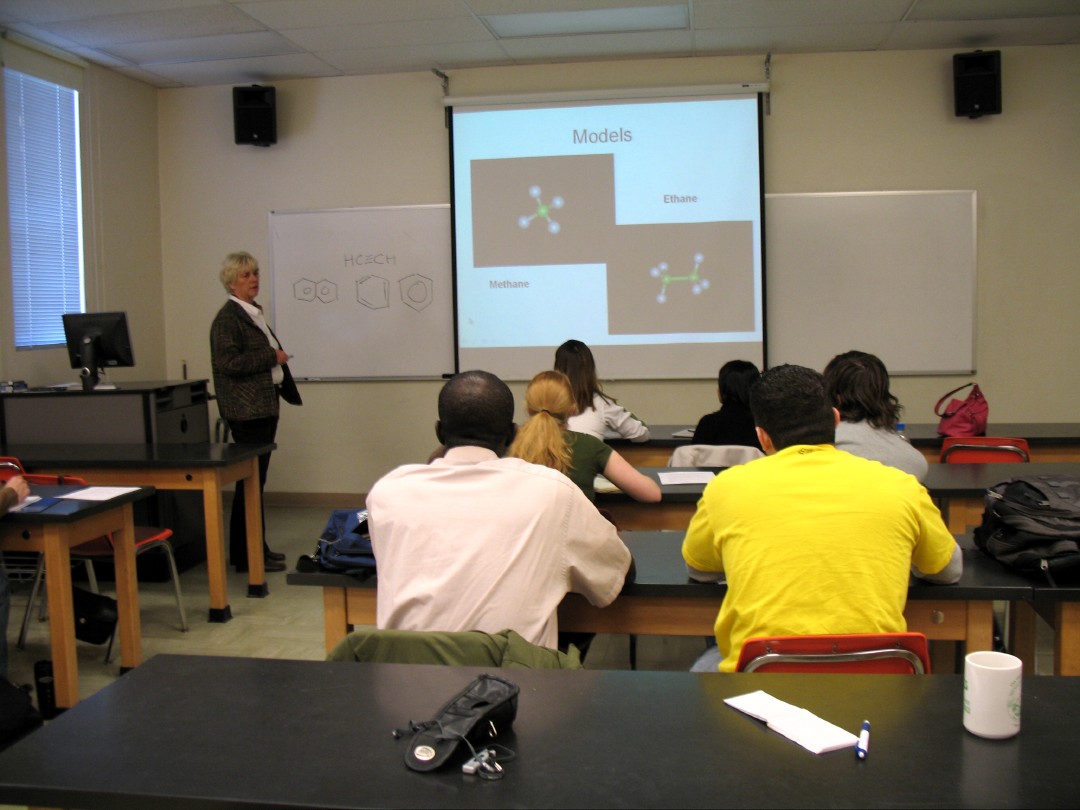
(Photographic during her presentation.)
She is the director of the DRI Organic Analysis Laboratory (OAL).
Barbara has actively worked with National Air Quality Standards.
She will discuss, and then demonstrate in her laboratory, measurements of air toxics.
As a primer, read this introduction to organic chemistry.
Organic chemistry happens when functional groups get together or split.
You can practice organic chemistry here.
Week 6: 27 Feb - 1 Mar 2007
This week activities will finish up the introduction to circuits, sun photometery,
and will introduce circuit board layout and circuit schematic preparatation.
You can download and install the software on your own machine,
and we will use the Physics Department's computer lab also.
Sun photometer circuit schematic and board layout.
With all the snow, let us look at some snow crystals.
Example sun photometer spreadsheet from 20 Feb 2007.
We will also prepare for next week's visit at DRI's Organic Analysis Lab (see calendar).
The timing is right for this visit with Barbara Zielinska of DRI.
Week 5: 20 Feb - 22 Feb 2007
On Thursday we will also finish up the basic electronics section by working with thermistors,
and will work with ice clouds and electric fields.
See this presentation on thermistors.
This week will be devoted to more work with sun photometers.
Some ATMS 360 students working with sun photometers.
A new homework assignment has been announced that works with sun photometers.
See the notes for 20 Feb 2007 on sun photometers.
So far we have had an introduction to two group activities, the air pollution group and the sun photometer group.
Soon we will introduce the air motions group activities to everyone and then will start the individual group activities.
Air pollution group outline.
Air motions group outline.
Sun photometer group outline. See the sun photometer links page.
Week 4: 13 Feb - 15 Feb 2007
We will finish the basic circuit laboratory together before starting the group projects.
Then we will make an operational amplifier based transimpedance amplifier for the LED as a detector (sounds impressive, but is quite simple).
Review how the diode works. Diode specification sheet for fiber optics and the sun photometer.
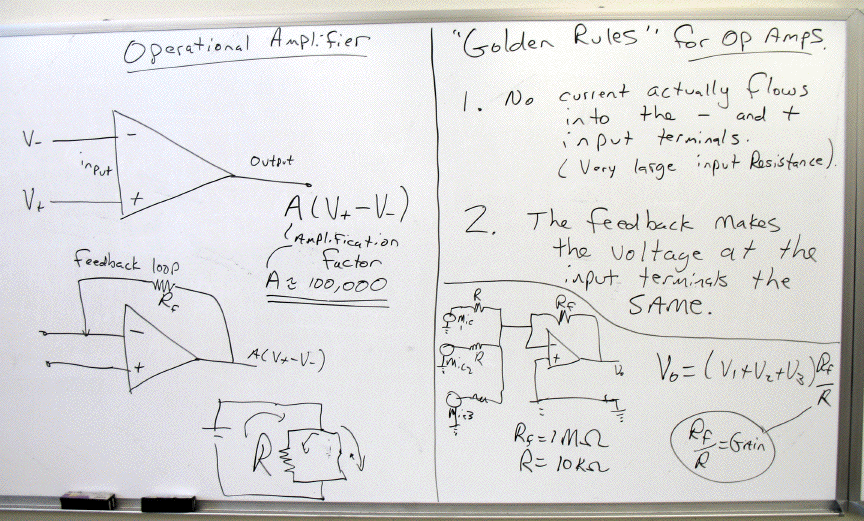
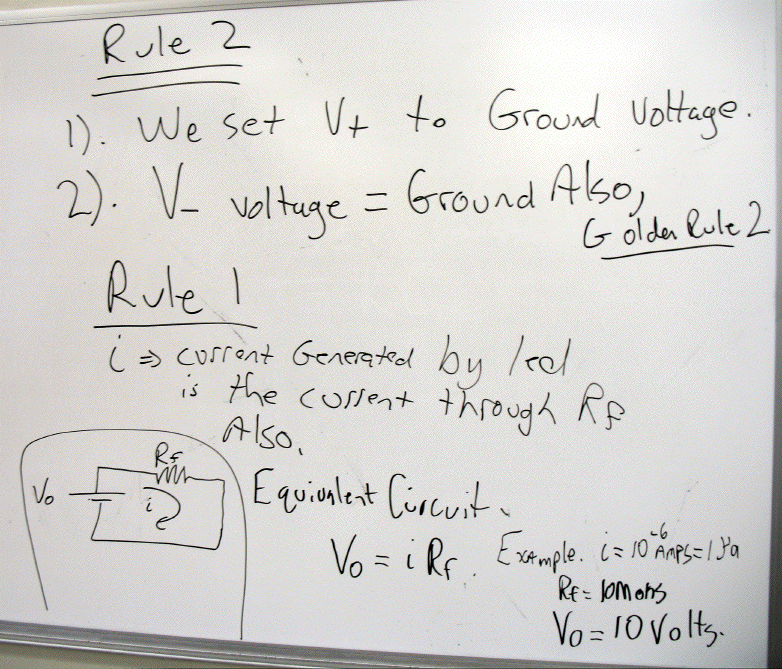
Basic Operational Amplifier discussion. Op Amp circuit laboratory for more detail.
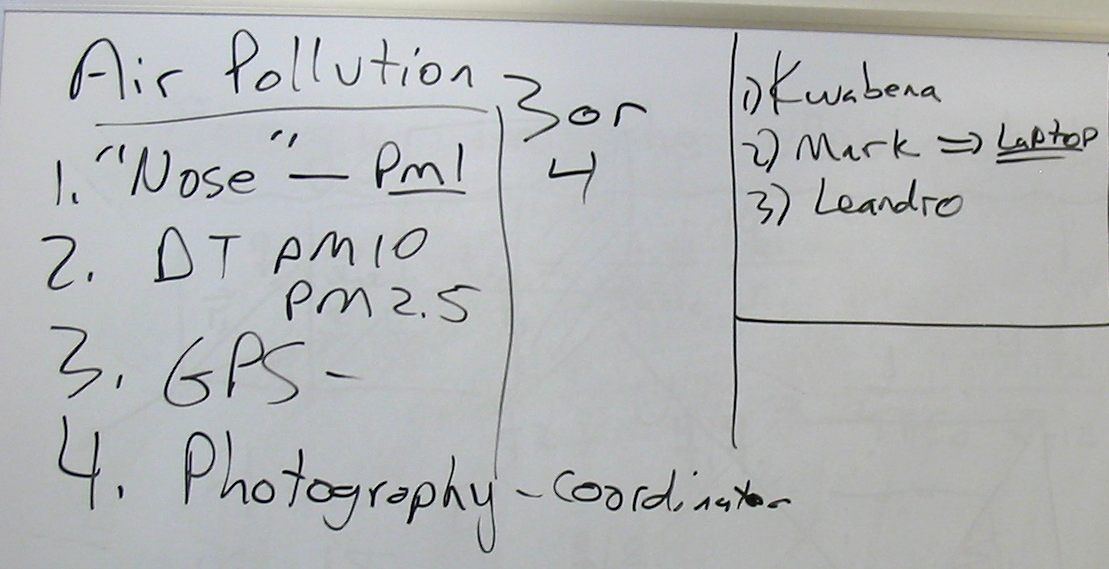
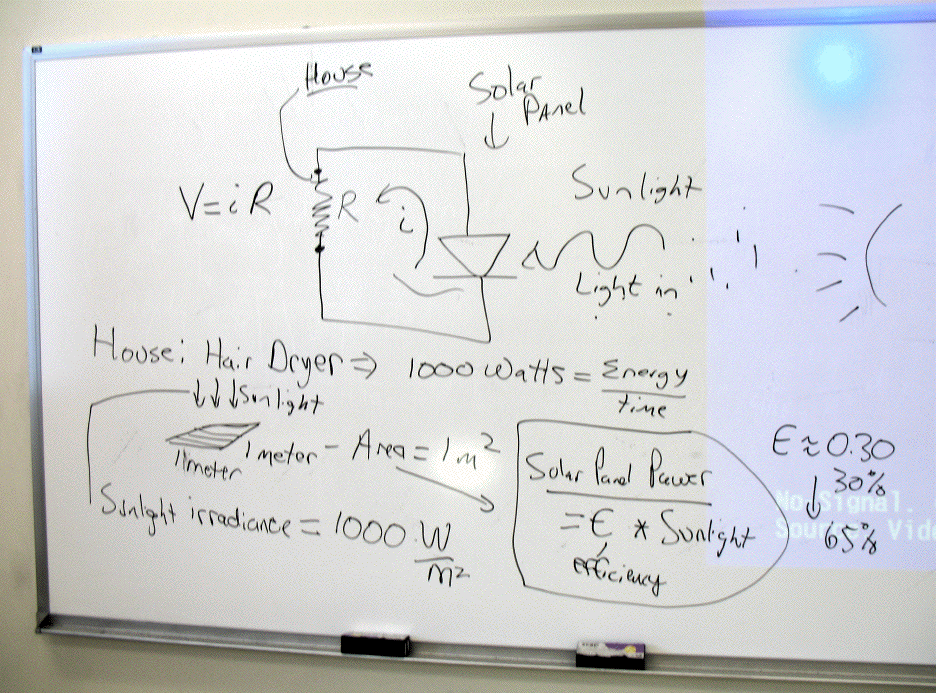
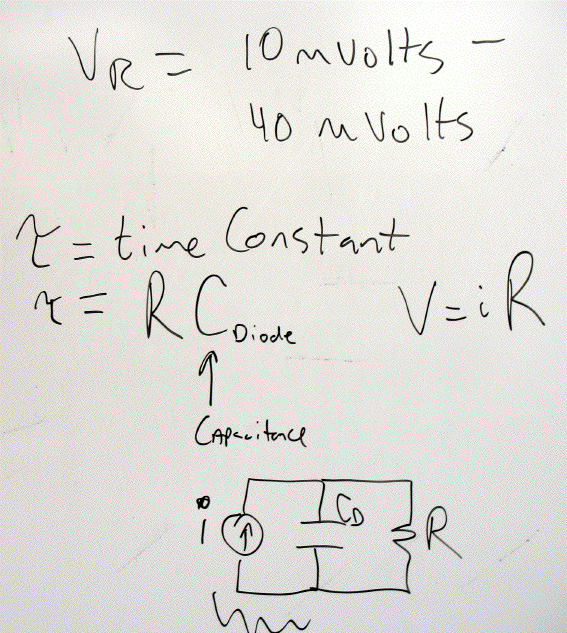
Some whiteboard notes made during this week. Note 1, note 2, note 3, note 4.
Week 3: 5 Feb - 9 Feb 2007
We will do a basic circuit laboratory together before starting the group projects.
Once finished we start the group projects.
Air pollution group outline.
Air motions group outline.
Sun photometer group outline. See the sun photometer links page.
Week 2: 30 Jan - 1 Feb 2007
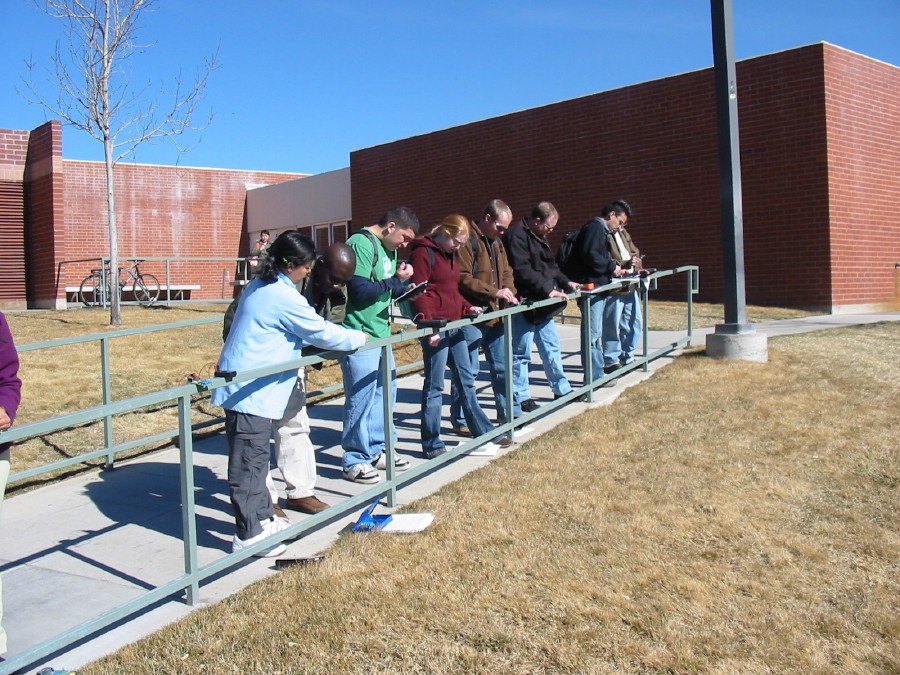
Results from ambient air measurements on campus on 25 Jan 07.
Presentation summarizing results.
Large scale version of this project: Los Angeles and the California Air Resources Board.
A presentation of on-road air pollution measurements in LA.
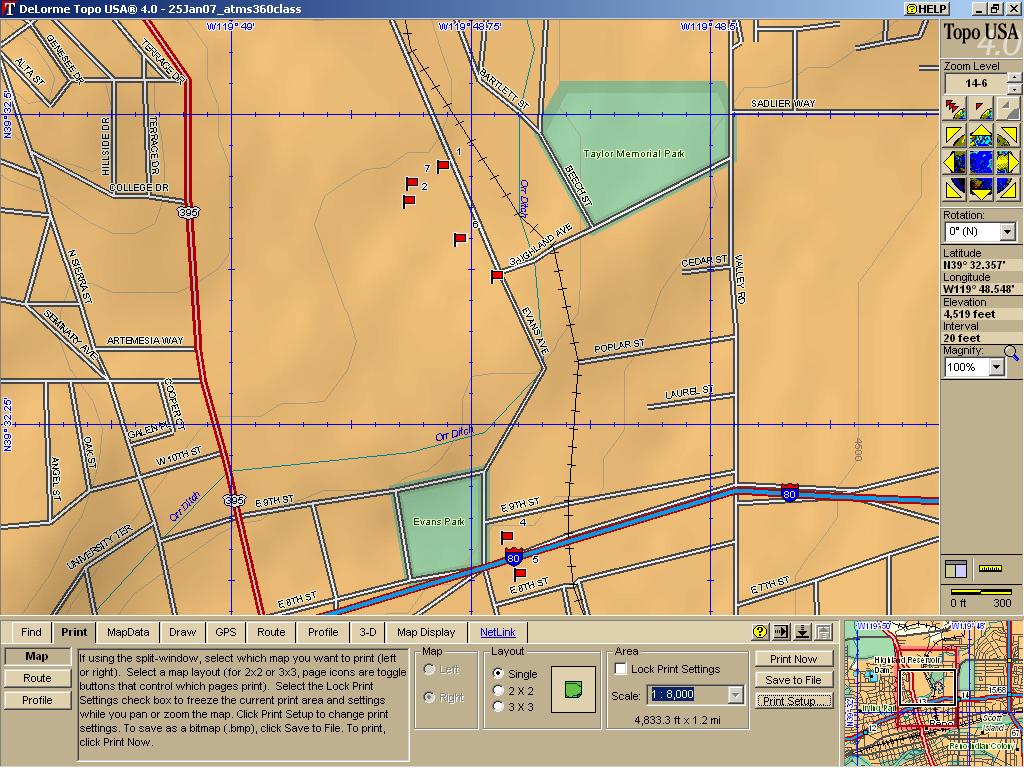
Map of the sites visited.
Photographs of the various measurement places.
Documentation and photographs by John Steelmon.
Measurements of PM, Temperature, RH, and CO2: Spreadsheet, Raw data PM1, PM2.5, PM10.
Spreadsheet of values obtained during class on 25 Jan 07 by Shane Cleary.
Week 1: 23-25 Jan 07
Introductions.
What comes out the tailpipe of your car? A more refined look.
Car catalytic convertors. What they do.
EPA Particle size terminology and discussion.
DustTrak instrument, a light scattering instrument that reports aerosol mass concentration. Theory of operation.
Telaire instrument for CO2 gas concentration measurement.
MultiRAE plus for CO and VOC (overview and manual).
Labview software used for the 'nose' sampler to acquire PM, CO2, temperature and RH.
Make plans for the 25 Jan 07 meeting, to make measurements along the pathway to, and including, the bridge over I80. The basic idea is that we will use the excess CO2 measurement (amount of CO2 above the background) to get a fuel based emission rate for excess particulate (as measured by the DustTrak) , and VOC, caused by emissions from vehicles travelling on I80. Will will also measure excess CO and volatile organic compounds. EPA does all manner of measurement of vehicle emission rates, and this is a simple way to see what it is all about, and perhaps to point to a methodology that is simple for large numbers of vehicles. Hopefully it won't rain on Thursday. Log sheet for these measurements.